
Industries
Date: 2026-09-02
1、 Application scenarios
According to Prismark, an authoritative media in the electronics industry, the usage of medical electronic PCBs accounts for about 2% of the total PCB output value. Although the overall share is not large, the importance of PCB boards to medical electronics is self-evident. The following are the applications of PCBs in the field of medical electronics:
Diagnostic and monitoring equipment, such as electrocardiographs (ECG), electroencephalographs (EEG), blood pressure monitors, blood glucose meters, etc;
Treatment and life support equipment: pacemakers, defibrillators, ventilators, infusion pumps;
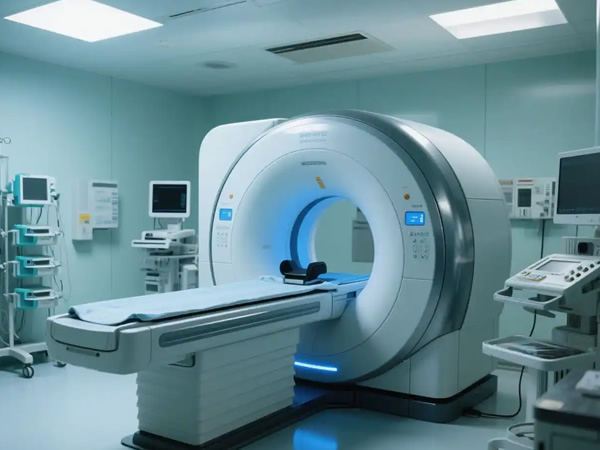
Medical imaging systems: MRI, CT scanners, ultrasound equipment;
Wearable and remote medical devices: portable blood glucose monitors, remote monitoring devices;
Surgical and robot assisted equipment: endoscopes, surgical robots, laser therapy devices.
Laboratory and analytical instruments: blood analyzer, PCR machine, gene sequencing equipment.


2、 Difficulties in control
Medical electronic products are known for their high reliability, safety, and strict environmental protection due to their direct relationship with human health and safety. In addition, high-end medical electronics is a highly technology intensive industry with a wide range of cutting-edge technology applications, which also leads to high precision requirements for some medical devices. Specifically for the production and manufacturing of circuit boards, the following controls need to be implemented:
1. Material selection: The board material needs to be resistant to CAF and have medium to high TG values to ensure that ion migration or deformation of the circuit board caused by high temperatures does not occur; Copper foil and copper balls need to be selected with high purity to ensure good conductivity and fatigue resistance. Ink needs to be selected with high temperature resistance and strong chemical corrosion resistance.
2. Environmental requirements: For some products that come into direct contact with the human body, halogen-free sheet materials and halogen-free ink are required. The environmental requirements for shipment need to comply with the latest ROHS and Reach regulations. For some experimental analysis instruments or consumables, it is even necessary to control the content of specific elements to avoid errors in the detection results.
3. Copper thickness: The vast majority of medical PCB boards require compliance with IPC-3 standards for copper thickness, with a hole copper thickness of ≥ 23um. In addition, the ductility of copper needs to be ensured to avoid the occurrence of hole copper tearing, which can lead to open and short circuits in electronic systems.
4. Hole thickness: Hole thickness has a significant impact on the stability of circuit boards, mainly in two aspects: affecting the consistency of copper plating holes, which may lead to local thinning of copper holes, resulting in tearing and short circuits; On the other hand, excessive hole thickness can lead to CAF problems, resulting in temporary malfunction of medical electronic products
5. Signal integrity: Due to the high proportion of medical boards (especially imaging products) with multiple sets of differential impedances, signal requirements are relatively high. The following points need to be controlled: etching of circuit boards, and the etching accuracy should be well controlled; Electroplating requires controlling the uniformity of electroplating; Pressing requires controlling the production details, controlling the amount of glue overflow and alignment progress.
6. Appearance requirements: Medical circuit boards have strict appearance requirements. Many customers require that the board surface should not be scratched, the gold surface should not have watermarks or scratches, the solder pads should not be damaged, and the solder mask should not be repaired or only partially repaired This has very high requirements for production detail control.
How is the company managed and controlled?
We obtained certifications such as IS9001, ISO14001, UL as early as 2006. With 5 management tools as the basic requirements, we have established a strict quality management system to ensure that there are no functional issues or defects. The following are our company's control measures:
In terms of materials: Copper clad laminates are selected from top domestic and international brands such as KB, Shengyi, Taiwan South Asia, etc., with a TG value starting at 150 ℃ and CAF resistant sheet materials. Copper foil, copper balls, ink, dry film and other materials are also made from top domestic and foreign brands to ensure quality from the source.
In terms of environmental protection: If customers have halogen-free requirements, we will use halogen-free sheet materials and halogen-free inks for production. We will clean production equipment and testing tools, such as film, screen printing machines, etc; We also measure the halogen content during the production process and before shipment to ensure that the halogen content is ≤ 900ppm, which complies with RoHS and REACH standards.
In terms of production, we use the positive plate process for the electroplating process to avoid the occurrence of copper free holes; In terms of electroplating uniformity, we regularly conduct carbon treatment and uniformity testing. When producing medical circuit boards, we adopt the method of low current slow copper plating time to maximize the uniformity of electroplating; For hole thickness, we will reduce the cutting speed of the drilling rig and lower the stacking to ensure that the hole thickness is ≤ 25.4um (60um for holes larger than 0.8mm), which is far below the industry standard. Signal integrity involves impedance control. Our etching tolerance is ± 10% or 1.5mil, the plating uniformity COV is ≤ 8%, and the impedance tolerance is controlled to ± 10% to ensure signal integrity; The control of appearance mainly requires employees to have good production awareness. We have not only developed comprehensive SOP operating standards, but also publicized and summarized quality issues in weekly meetings to ensure that the appearance can achieve "zero defects" on the premise of stable quality.


3、 What are our medical electronics clients?
With a profound understanding of medical electronics technology and stable quality, we have gained the trust of many customers in the medical electronics field. Here is a list of some of our medical electronics customers:


4、 Future improvement direction
With the accelerated aging of the global population, the demand for portable medical and home medical equipment has grown rapidly, making medical equipment have broad development prospects. Conventional medical circuit boards are generally 2-16 boards, which are not difficult but require high quality. High end medical type boards are gradually developing towards the HDI route. In addition, the application of soft hard combination boards in medical electronics should not be underestimated. From controllers to electronic capsules, some medical consumables require soft hard combination boards. The following is our company's technical plan in this field:
|
field |
project |
Process capability (now) |
Process capability (future) |
|
Medical Electronics |
Uniformity of electroplating |
COV≤10% |
COV≤5% |
| Line etching tolerance | ±10% / ±1.5mil | Can meet future needs | |
| Impedance control | ≥±10% | ≥±5% | |
| Appearance | There will be Filipino marks and some scratches | Resolve the scratches on the film and appearance | |
| HDI order | 2nd order HDI | 3rd order HDI, arbitrary order HDI | |
| Rigid-Flex PCB | Thinest plate thickness: 0.3mm; highest production order 2, sample order 3 | Plate thickness: Large scale production of 0.2-0.25mm soft hard bonding plates has not been achieved; Realize mass production of 3rd order/arbitrary order HDI soft hard composite board |



 Follow Us
 +86 13088807439
  E-mail